News & Updates
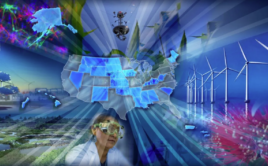
2021 NSF EPSCoR Annual PI Meeting Materials Now Available
The Session Recordings and Presentations from the 2021 NSF EPSCoR annual PI Meeting held virtually May 17-21 are now available to view and download via the meeting website. See the Meeting Materials Page
Jessica Molesworth, EIF Executive Director, moderated the 10 am panel on Wednesday entitled, “EPSCoR Interagency Coordinating Committee Panel” which included representatives from the DOD, NASA, NIH and USDA-NIFA.
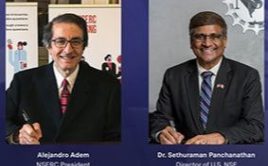
US-Canada partnership announced for collaboration in research and innovation
The U.S. National Science Foundation and the Natural Sciences and Engineering Research Council of Canada, or NSERC, announced the first formal partnership between the agencies that support fundamental discovery research in the U.S. and Canada. The partnership paves the way for new collaborations between researchers in both countries to build inclusive partnerships at the frontiers of science and emerging technologies and fosters a shared commitment to equity, diversity and inclusion within the research enterprise.

EIF News and More
The EPSCoR/IDeA Foundation has created a biweekly newsletter featuring news, deadlines and events from the five different EPSCoR funding agencies and the five different IDeA programs, as well as highlights from the EPSCoR and IDeA jurisdictions.

KANSAS: New COVID-19 outpatient treatments including pill, injection and inhaled medicine part of clinical trial at KU Medical Center
Three new outpatient treatments will be tested at the University of Kansas Medical Center in efforts to broaden options for COVID-19 patients. These new treatments may make it easier to receive COVID-19 treatment outside a hospital, as they include:

EIF Board Member receives ACS Award
Kristin Bowman-James, University of Kansas Distinguished Professor of Chemistry, DIrector of Kansas EPSCoR, and member of the EPSCoR/IDeA Foundation (EIF) Board of Directors, was the 2021 recipient of the American Chemical Society (ACS) Award in Inorganic Chemistry. This is Bowman-James’ first major national award, and she is only the second woman to receive the award since its inception in 1962.
Envisioning the Future of NSF EPSCoR
The National Science Foundation (NSF) has issued a Dear Colleague Letter: Envisioning the Future of NSF EPSCoR. The purpose of the letter is to announce a year-long visioning activity to guide the future of NSF's Established Program to Stimulate Competitive Research (EPSCoR), led by an external committee of national experts.

2021 NSF EPSCoR RII Track-1 Solicitation
PROGRAM SOLICITATION: NSF 21-586
- Letter of Intent Due Date(s) (required) (due by 5 pm submitter's local time): July 14, 2021
- Full Proposal Deadline(s) (due by 5 pm submitter's local time): August 16, 2021
The Established Program to Stimulate Competitive Research (EPSCoR) is designed to fulfill the mandate of the National Science Foundation (NSF) to promote scientific progress nationwide. Jurisdictions are eligible to participate in the NSF EPSCoR Research Infrastructure Improvement (RII) Program based on their level of total NSF support over their most recent five years (see RII eligibility). Through this program, NSF facilitates the establishment of partnerships among academic institutions and organizations in governmental, non-profit, and commercial or industrial sectors that are designed to effect sustainable improvements in a jurisdiction's research infrastructure, Research and Development (R&D) capacity, and hence, its R&D competitiveness.
Jurisdiction Highlights
The EPSCoR/IDeA Foundation has added a new section to our website with brief updates to news and events from the EPSCoR and IDeA jurisdictions with links to more information. Visit the new page
New NIH HIV/AIDS Research Facilities Limited Competition Funding Opportunity for IDeA States
The National Institutes of Health (NIH) Division of Program Coordination, Planning and Strategic Initiatives, Office of Research Infrastructure Programs (ORIP) and Office of AIDS Research (OAR) announce a new Funding Opportunity Announcement inviting applications from qualified research institutions to seek funds to develop or renovate research facilities that support HIV/AIDS research in areas of basic, translational, clinical, and social and behavioral science research. Targeted are institutions that serve underrepresented and underserved populations or that are in Institutional Development Award (IDeA)-eligible states. Research-intensive institutions are not eligible. The facilities must support research aligned with the NIH-established priorities for HIV/AIDS research. Any request must be justified by current and anticipated future research needs.
NSF launches Engineering Research Visioning Alliance (ERVA) as Force Multiplier for High-Impact Research. EIF is a Core Partner.
America’s economic competitiveness is tied directly to the pace of scientific and technological discovery, which requires sustained, long-term support as well as agility. To help the United States stay at the forefront of research and innovation — and maintain its leadership in the global economy — the National Science Foundation (NSF) Directorate for Engineering has launched the Engineering Research Visioning Alliance (ERVA), the first engineering research visioning organization of its kind.