NSF announces major investment in spectroscopy to advance critical imaging technologies
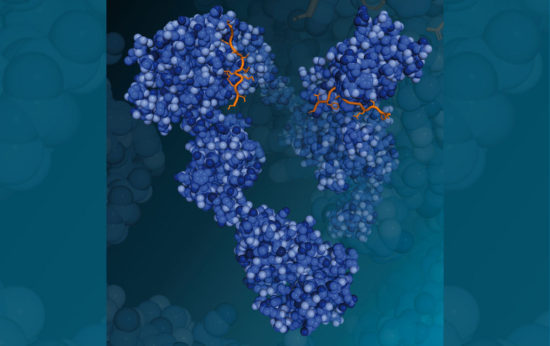
Proteins play important roles in cellular signaling. The image shows a structural model of a protein enzyme bound to its target molecule as part of the process to modulate the signaling. NMR spectroscopy was used to identify the bipartite binding interface between the enzyme and its substrate. The ultra-high field NMRs planned for the NAN will provide even better resolution, speed, and sensitivity for similar analyses leading to new understandings in structural biology. Credit: Irina Bezsonova, Department of Molecular Biology and Biophysics, UCONN Health
The U.S. National Science Foundation is advancing biomolecular research through the establishment of a geographically distributed Network for Advanced Nuclear Magnetic Resonance. This investment of $40 million is made through NSF's Mid-Scale Research Infrastructure II program, an NSF-wide effort to meet the research community's needs for modern research infrastructure to support science and engineering research.
The network will allow researchers to have access to ultra-high field nuclear magnetic resonance spectrometers to study the structure, dynamics and interactions of biological systems and small molecules. Understanding how these facets interact and how life has evolved and adapted, including under extreme conditions and environments, will advance the scientific community's understanding of biology and may result in the development of new materials, battery components, pharmaceutical ingredients, nanomaterials, surface coatings and catalysts. These new materials can further advance fields such as biology, medicine, engineering, electronics and manufacturing.
Read the full announcement