NEW HAMPSHIRE: Grad student developing new tools to manage devastating apple disease
University of New Hampshire
University of New Hampshire researchers have teamed up with colleagues from Pennsylvania State University to investigate whether a byproduct of the seafood industry could help manage one of the most devastating fruit diseases facing the US apple industry.
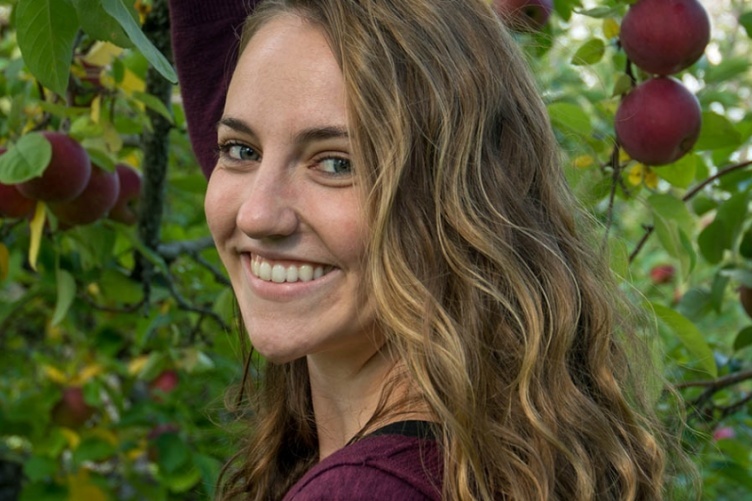
University of New Hampshire graduate student Liza DeGenring is investigating the development of new tools to manage apple scab for Northeast farmers. Specifically, she is investigating the combination of beneficial microbes with a natural compound called chitosan – a byproduct of mostly shrimp shells from the seafood industry.
According to DeGenring, the success of sustainable agriculture in the United States will increasingly rely on the integration of biologically based methods with conventional agricultural practices that rely on fungicides. The scientific and agricultural community has begun to recognize the critical role microorganisms, such as bacteria and fungi, and their metabolites play in agroecosystem health.
This material is based upon work supported by the NH Agricultural Experiment Station, through joint funding of the National Institute of Food and Agriculture, US Department of Agriculture, under award number 1016530, and the state of New Hampshire. This work is also funded by a Northeast Graduate Student USDA Sustainable Agriculture Research and Education grant and a New Hampshire Specialty Crop Block grant.