NEW MEXICO: INBRE researcher featured in The Scientist magazine
Adriana L. Romero-Olivares Tracks Fungi’s Response to Climate Change
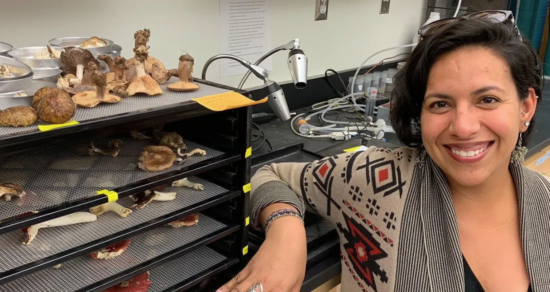
The New Mexico State University soil microbiologist uses molecular tools to understand how fungi are adapting to a warming world and what that might mean for global nutrient cycles.
“Her use of many different approaches, from culturing microbes to mining big data, makes [Mexico State University’s Adriana L.] Romero-Olivares’s work particularly strong,” says Camille Defrenne, an ecosystem ecologist at Oak Ridge National Laboratory. “She’s a very complete scientist with a holistic view of how microbes respond to global change. She really represents the next generation of women in science.”
Romero-Olivares launched her lab at New Mexico State University last August. In addition to continuing her climate work, she’s also expanding into new territory in her own backyard. “While we know that deserts work in very different ways than other ecosystems, we don’t know what role fungi play,” she says. Beyond serving as the desert’s decomposers, “it’s an exciting challenge to figure out what else they might be up to.”
Growing up in Hermosillo, Mexico, Romero-Olivares spent many weekends among the stately saguaros of the Sonoran Desert. Her father, drawing on his knowledge of local plants and animals, taught her the basics of biology, a path she followed after a high school teacher suggested she study science. Toward the end of her undergraduate career at the Autonomous University of Baja California, she says, she fell in love with molecular biology. “I had no idea what this invisible world looked like, but once I did, it blew my mind.”