NEW HAMPSHIRE: New research clarifies the capacity of rivers to filter pollutants
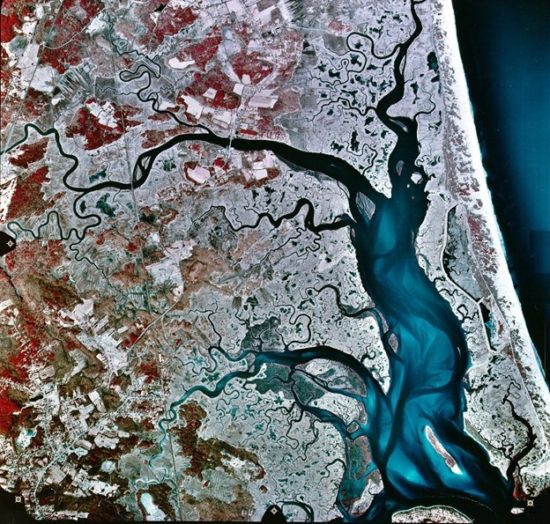
Like a human body's circulatory system that moves blood and carries nutrients, Earth’s river networks are similar conduits.
One of a river's important functions is removing pollution that ends up in its waters – from roads, lawns, septic systems, sewage treatment plants and other sources – before those waters reach sensitive downstream ecosystems like estuaries and oceans.
New NSF-funded research by New Hampshire investigators published in Nature Communications finds that watershed size plays a major role in a river network's ability to do that work. The findings further the understanding of which estuaries and coastal areas will be impacted by human development in their watersheds.
"It’s not well-known what controls how much pollutant filtration river networks can do," says Wilfred Wollheim of the University of New Hampshire, lead author of the paper. The research was funded by the U.S. National Science Foundation, and includes work at the NSF Plum Island Ecosystems and Arctic Long-Term Ecological Research sites.
"This study, which analyzes previously existing data, demonstrates the value of investments in long-term data archiving for the study of scale-dependent processes," says Francisco (Paco) Moore, a program director in NSF's Division of Environmental Biology, which supported the research along with NSF’s Division of Ocean Sciences. "Our understanding of ecological processes will continue to increase as we reexamine existing data in a deeper context."