KANSAS: NSF-funded study finds reintroducing bison to grasslands increases plant diversity, drought resilience
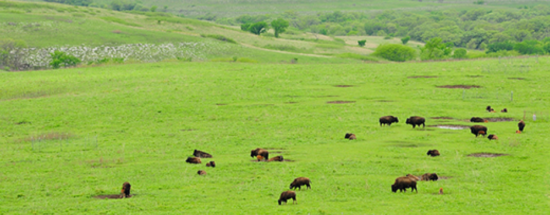
A Kansas State University-led study has found that reintroducing bison — a formerly dominant grazer — doubles plant biodiversity in a tallgrass prairie. The research includes more than 30 years of data collected at the Konza Prairie Biological Station, an NSF-supported Long-Term Ecological Research site, and is published in the journal Proceedings of the National Academy of Sciences.
"Bison were an integral part of North American grasslands before they were abruptly removed from more than 99% of the Great Plains," said Zak Ratajczak, the lead researcher. "The removal of bison occurred before quantitative records and therefore, the effects of their removal were largely unknown."
The study took place in the Flint Hills ecoregion, the largest remaining tallgrass prairie landscape. "Our results suggest that many grasslands in the central Great Plains have substantially lower plant biodiversity than would have occurred before bison were wiped out," Ratajczak said. "Returning or 're-wilding' native megafauna could help to restore grassland biodiversity."