DELAWARE: Former Delaware INBRE student featured in an article in CRISPR Medicine News
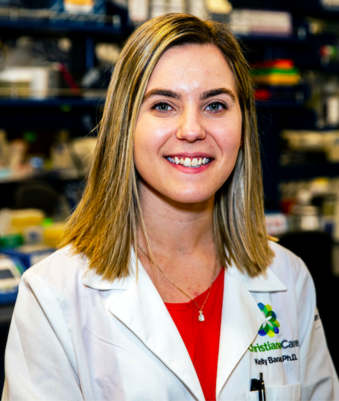
Kelly Banas, along with colleagues at ChristianaCare and University of Delaware, Newark, have developed an innovative CRISPR strategy to restore the chemosensitivity of non-small cell lung cancer cells.
Resistance to chemotherapy is a major challenge in the treatment of non-small cell lung cancer. By profiling the spectrum of outcomes arising from CRISPR-based knockout of the NRF2 protein, which contributes to chemoresistance, Eric Kmiec Ph.D. and Kelly Banas Ph.D. of the ChristianaCare Gene Editing Institute have developed a new therapeutic strategy that increases the sensitivity of cancer cells to traditional chemotherapy.
In an article published last month in Gene Therapy, the team describe a new anti-cancer strategy that uses CRISPR-Cas9 to knock out Nuclear Factor Erythroid 2-Related Factor 2 (NRF2), a protein that is overexpressed in NSCLC cells and leads to chemoresistance. With a strong focus on safety and the patient experience, principal investigator Kelly Banas Ph.D. left no stone unturned - this study clearly demonstrates that there are knockouts, and then there are knockouts.
The paper is unique because of its deep dive into the spectrum of outcomes that result from CRISPR knockouts of NRF2. With this approach, the team were able to develop a robust strategy that is likely to considerably improve patient outcomes; with careful design, CRISPR-based disruption of NRF2 can result in exon skipping, which in some cases may increase chemosensitivity in cancer cells.