DELAWARE: A UD study with worms provides intriguing results
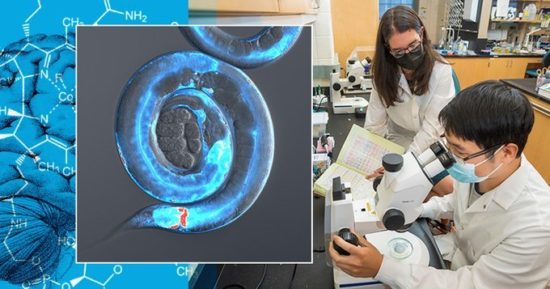
Worms don’t wiggle when they have Alzheimer’s disease. Yet something helped worms with the disease hold onto their wiggle in Dr. Jessica Tanis’s lab at the University of Delaware.
In solving the mystery, Tanis and her team have yielded new clues into the potential impact of diet on Alzheimer’s, the dreaded degenerative brain disease afflicting more than 6 million Americans.
“As humans, we have immense genetic diversity and such complex diets that it makes it really hard to decipher how one dietary factor is affecting the onset and progression of Alzheimer’s,” Tanis said. “That’s where the worms are amazing. The worms we use all have exactly the same genetic background, they react to amyloid beta like humans do, and we can exactly control what they eat, so we can really get down to the molecular mechanisms at work.”
The research is published in the Sept. 28 issue of Cell Reports. The work was supported through grants from the University of Delaware Research Foundation and the NIH-funded Delaware INBRE program, where Tanis was a pilot investigator, and an NIH-funded Alzheimer’s supplement grant.