ALASKA: NSF EPSCoR researchers use biochemical lab techniques to collect marine life data
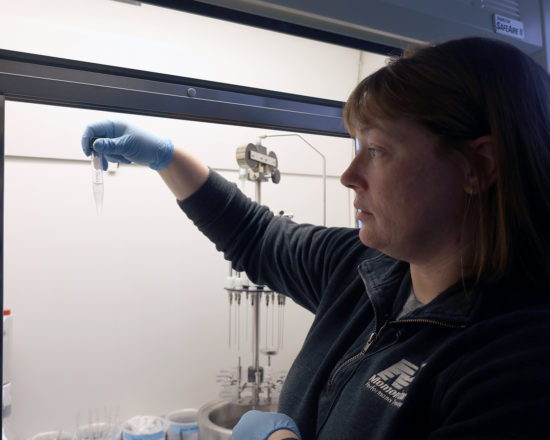
Fire & Ice researchers Julie Schram (pictured) and Jessica Glass are doing things the easy way. At least, that’s the idea. Schram, a Co-PI (and a faculty hire) of the Alaska NSF EPSCoR Fire & Ice project and an Assistant Professor of Animal Physiology at the University of Alaska Southeast, and Glass, a fellow Fire & Ice faculty hire and an Assistant Professor in the UAF College of Fisheries and Ocean Sciences, are using biochemical lab techniques that enable them to collect data about marine life and their interactions without having to directly observe them in real time.
Schram’s students and colleagues are collecting marine invertebrates and seaweeds each month at selected Kachemak Bay and Juneau-area watersheds. They then freeze-dry the samples and crush them into a fine powder before extracting lipids from the organisms, which will be analyzed to gain a better understanding of the respective organisms’ diets and their overall condition.
In conjunction with Schram’s research, Glass’ research team is collecting water samples from the same coastal sites and analyzing their environmental DNA (eDNA), which is DNA found free-floating in the water. The team collects and filters ocean water, then uses Polymerase Chain Reaction (PCR) metabarcoding techniques to amplify DNA found in the sample. Once tests are completed they show what species’ DNA was present in the water and in what amounts, shedding light on biodiversity at the sampling site.